
- December 15, 2025

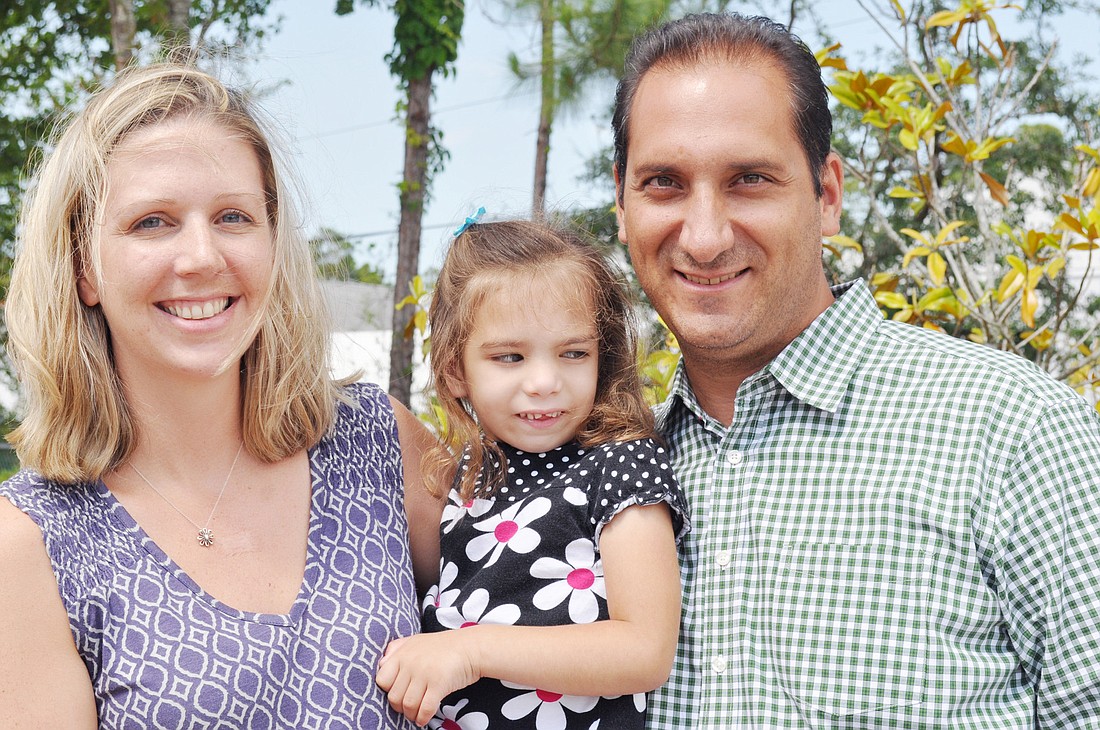
International Cri du Chat Awareness Week begins May 13.
Greenwich, Conn., in October 2008: Stephen and Kristi Furnari welcomed their first child, Katie, into the world.
Katie’s birth came via a normal pregnancy, but at birth, delivery room doctors and nurses noticed a few issues. Katie had a minor heart murmur, but that eventually resolved itself. She had a skin tag — which isn’t out of the ordinary for some newborns. She also had a smaller-than-average head and low muscle tone.
“Each issue wasn’t a major problem,” Stephen Furnari said Thursday.
When Katie was about 3 months old, she was visiting a pediatrician when the doctor recognized Katie’s symptoms from a prior case about 30 years ago. The doctor recommended Katie have genetic screening.
The results were gut-wrenching for the Furnaris.
Katie had cri du chat syndrome — a rare genetic disorder resulting from a missing piece in the P-region of the fifth chromosome. The name of the syndrome is based on the infant’s cry, which is high-pitched and often resembles the sound of a kitten when it meows. Cri du chat is French for “cry of the cat.”
Because of the rarity of the syndrome, doctors and nurses weren’t sure of Katie’s future. At the time of her birth, the doctor told Stephen and Kristi that their daughter likely would never walk or talk. The doctors also said it was possible that Katie could have a very short life — perhaps not even making it to the age of 1.
“It was the hardest piece of news that you ever get in your lifetime,” Furnari said. “Your life changes in an instant.”
The syndrome affects one in every 50,000 newborns. Approximately 35 newborns in the U.S. are diagnosed with the syndrome each year. Stephen Furnari said the closest other known person with cri du chat is in Miami.
With the help of Florida Hospital Flagler, Stephen and Kristi Furnari are trying to spread information about cri du chat, which is also called 5p- syndrome.
Sunday, May 13, will begin International Cri du Chat Awareness Week, which will last until May 19. The event is being sponsored by the 5p- Society, which is a U.S.-based support group for parents and caretakers of family members with cri du chat. There are 16 other countries that will take part in the awareness week, Furnari said.
“Our goal is to share the most up-to-date diagnosis and care information about the syndrome to as many health care professionals as possible,” he said. “We particularly want to reach pediatricians, ob-gyn doctors and maternity ward nurses who are the first line of defense when it comes to diagnosis.”
Thanks to the hospital, more pamphlets and flyers will include information on the syndrome. Health care providers will also be given information.
More awareness can lead to quicker diagnosis. In some cases, children weren’t diagnosed with the syndrome until they were 3 years old, but the earlier a diagnosis, the sooner a child can be placed into early intervention programs, including speech, occupational and physical therapies.
With these programs, children with cri du chat can live with their parents rather than in a health institution. They are expected to live a healthy, normal lifespan.
Stephen and Kristi Furnari, who moved to Flagler Beach about a year ago, still plan on taking things day by day.
“We expect (Katie) will always have some form of communication problem in expressing how she feels or what she wants,” Furnari said, as Katie ate chicken nuggets and french fries. But now, there’s a good chance that when Katie gets older, she will be able to live semi-independently.
And while Stephen and Kristi admit they can be control freaks, having Katie has completely changed that.
“You don’t have any control anymore and basically, you do the best you can, and you’re hopeful that she’ll progress,” he said.
It’s been about three-and-a-half years since Stephen and Kristi Furnari were told the prognosis. Today, Katie is walking and talking, saying words like “mommy” and “daddy.” She likes the beach and loves to chase the two cats and two dogs around the Furnaris’ home.
But Stephen Furnari said, “It’s materially altered our lives. It alters your outlook on life and your priorities.”
— [email protected]